- Out-of-Stock
En culture
En culture


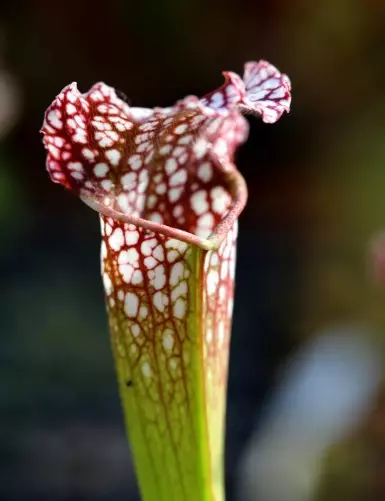
The large, vertical hood makes carnivorous plant !
Parentage: [( oreophila x leucophylla ) x purpurea]
Measures 15 to 25 cm in height.
From October to March (dormant period) , the plant's foliage partially disappears. Sarracenia x 'Paradisia Red Form' is then delivered as a rooted rhizome in a pot, ready to regrow in the spring.
The size indicated in the product description refers to the foliage size in summer.
Do you want to repot your plant under the best conditions? Consult our guide to successfully repotting carnivorous plants.
.png) 3 shipments per week
3 shipments per week
Usual shipments on Mondays, Wednesdays and Fridays, subject to service constraints.
 Secure payment
Apple Pay, PayPal, Credit Card, Bancontact, Ideal, Check, Bank Transfer
 Packaging and cushioning
24 years of experience in packaging our plants. 100% recycled or reused.
Up to 40°C in summer. Protect from frost if the carnivorous plant is in a small pot (less than 20 cm in diameter). Tolerates up to -15°C in a large pot or peat bog.
Use only rainwater, demineralized or osmosis . Water that is too hard will cause your Sarracenia to die in a few weeks. Do not use bottled water, as it generally contains too much salt, which is harmful to the plant. In summer, Place the plant in a large saucer with water. In winter, keep the substrate moist.
To be totally avoided! The plant provides its own organic nutrient needs thanks to its traps.
Full sun.
The mixture for carnivorous plants is the basic substrate for many species, you can make it yourself by mixing blond peat , perlite and vermiculite , (4V/1V/1V) or blond peat , and non-calcareous aquarium sand ( 2V/1V).

The large, vertical hood makes carnivorous plant !
Parentage: [( oreophila x leucophylla ) x purpurea]
Measures 15 to 25 cm in height.
From October to March (dormant period) , the plant's foliage partially disappears. Sarracenia x 'Paradisia Red Form' is then delivered as a rooted rhizome in a pot, ready to regrow in the spring.
The size indicated in the product description refers to the foliage size in summer.
Do you want to repot your plant under the best conditions? Consult our guide to successfully repotting carnivorous plants.