- Out-of-Stock
En culture
En culture


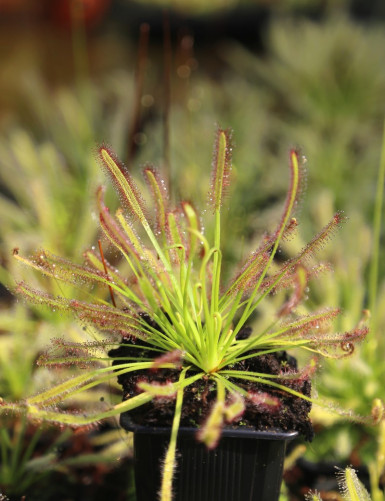
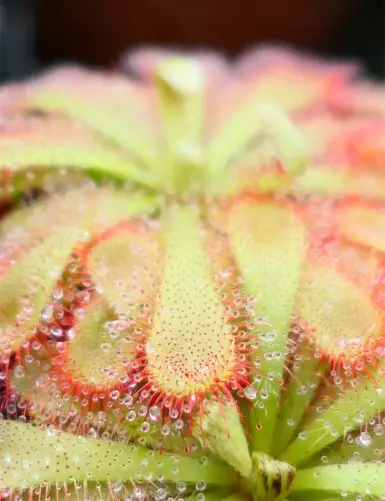
Native to tropical Africa and Madagascar , as its name clearly indicates, it is a robust Tropical caulescent Drosera (with a clearly visible stem), capable of growing up to 25 cm if it finds something to cling to.
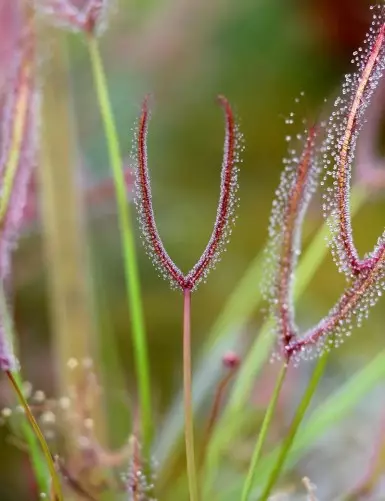
If necessary, it tends to creep. The sticky leaves are borne on petioles arranged along the stem. With age, only the upper part remains active, the base drying out.
A carnivorous plant that looks stunning when grown in groups!
Clump of 2 to 3 plants.
A plant that is dying is often due to unsuitable growing conditions. Consult our guide: Why is my carnivorous plant dying ?
.png) 3 shipments per week
3 shipments per week
Usual shipments on Mondays, Wednesdays and Fridays, subject to service constraints.
 Secure payment
Apple Pay, PayPal, Credit Card, Bancontact, Ideal, Check, Bank Transfer
 Packaging and cushioning
24 years of experience in packaging our plants. 100% recycled or reused.
Drosera madagascariensis has some specific requirements to thrive in your home. Here are some growing tips to help you care for this fascinating plant.
Drosera madagascariensis needs plenty of light to thrive. Place it where it will receive at least 6 to 8 hours of direct sunlight each day. A south- or southeast-facing window is ideal.
Use a light, well-draining substrate for your Drosera madagascariensis . Our special mix for carnivorous plants works very well.
Use demineralized, rainwater, or reverse osmosis water to water your Drosera madagascariensis. Ensure its roots are always in water, avoiding watering from above, except in winter when the substrate should remain consistently moist.
This plant prefers warm to moderate temperatures. Avoid temperatures below 15°C, as this could damage the plant.

Native to tropical Africa and Madagascar , as its name clearly indicates, it is a robust Tropical caulescent Drosera (with a clearly visible stem), capable of growing up to 25 cm if it finds something to cling to.
If necessary, it tends to creep. The sticky leaves are borne on petioles arranged along the stem. With age, only the upper part remains active, the base drying out.
A carnivorous plant that looks stunning when grown in groups!
Clump of 2 to 3 plants.
A plant that is dying is often due to unsuitable growing conditions. Consult our guide: Why is my carnivorous plant dying ?