- Out-of-Stock
En culture
En culture


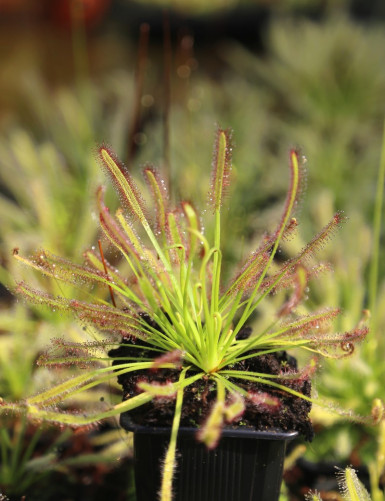
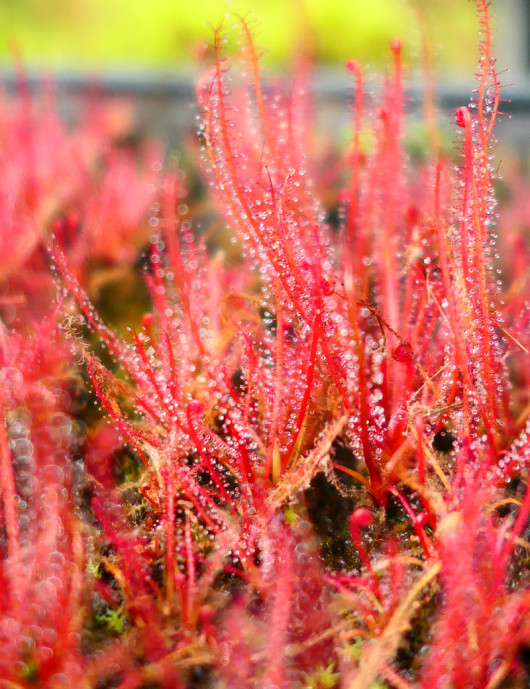
In spring, this American Drosera unfurls its leaves, which are more than 30 cm long, and leaves them erect, waiting for future captures...
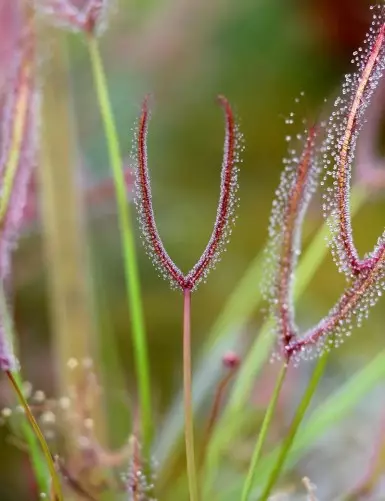
This clone has the particularity of being redder and finer than the botanical carnivorous plant with mucilage of a very marked color, of not producing a hibernaculum in winter and, compared to Drosera x hybrida , of being much taller and more erect.
---
In dormancy , that is to say in winter rest from October to March, Drosera filiformis 'red' creates a hibernaculum which will allow it to survive the winter and this after having lost all its leaves. If it is impossible for us to guarantee the survival of all the plants during the winter, the interest is strong because the feet are all the more vigorous in the spring that they are already in place at your place.
.png) 3 shipments per week
3 shipments per week
Usual shipments on Mondays, Wednesdays and Fridays, subject to service constraints.
 Secure payment
Apple Pay, PayPal, Credit Card, Bancontact, Ideal, Check, Bank Transfer
 Packaging and cushioning
24 years of experience in packaging our plants. 100% recycled or reused.
Use only rainwater, demineralized or osmosis . Water that is too hard will cause the plant to die in a few weeks. Do not use bottled water, it generally contains too much salt, which is harmful to the plant. In summer, place the plant in a large saucer with water at all times.
In winter, keep the substrate moist without leaving the plant with its feet in water.
Up to 30°C in summer and 0 to 15°C in winter.
Carnivorous plant mix is the basic substrate for many species, you can make it yourself by mixing blond peat , perlite and vermiculite , (4V/1V/1V) or blond peat , and non-calcareous aquarium sand (2V/1V). Sphagnum moss is also suitable.
For optimal growth, high light is necessary. Drosera appreciate a partial shade exposure , or full sun in the early morning, or late afternoon. From spring to autumn, they grow by forming new leaves. In winter, if you cannot leave outside the species that need a cool winter rest, place them in a cool room under artificial light .
To be totally avoided! Plants provide for their own organic nutrient needs through their traps.
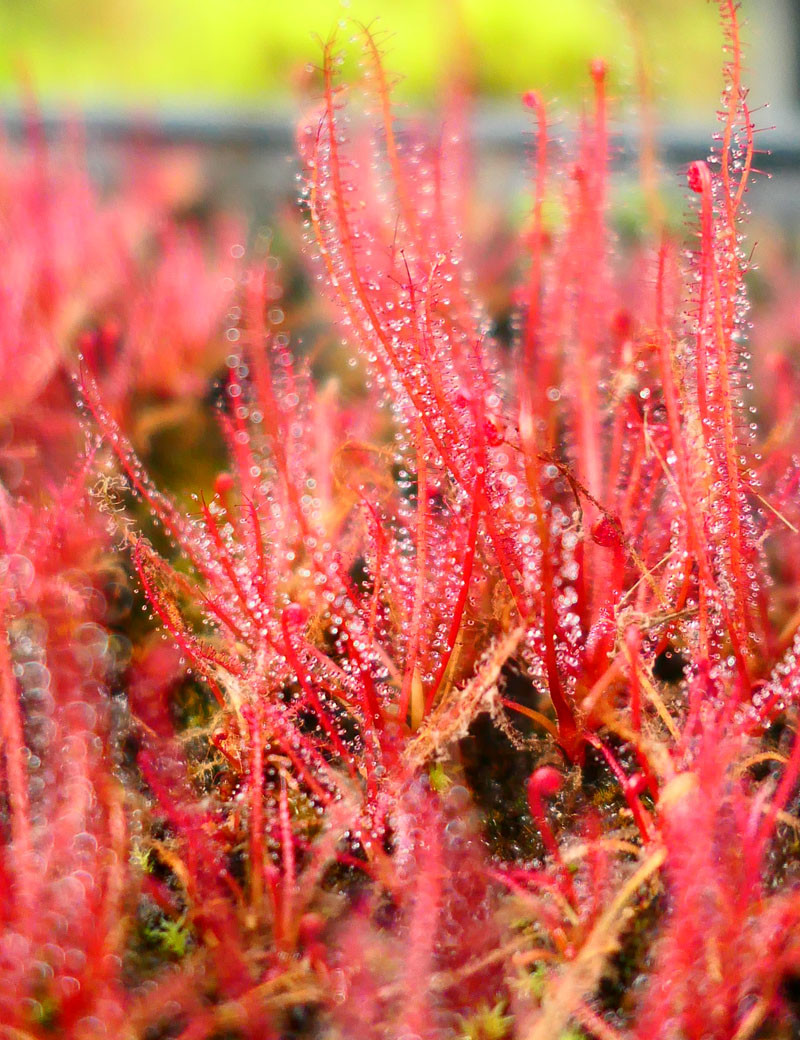
In spring, this American Drosera unfurls its leaves, which are more than 30 cm long, and leaves them erect, waiting for future captures...
This clone has the particularity of being redder and finer than the botanical carnivorous plant with mucilage of a very marked color, of not producing a hibernaculum in winter and, compared to Drosera x hybrida , of being much taller and more erect.
---
In dormancy , that is to say in winter rest from October to March, Drosera filiformis 'red' creates a hibernaculum which will allow it to survive the winter and this after having lost all its leaves. If it is impossible for us to guarantee the survival of all the plants during the winter, the interest is strong because the feet are all the more vigorous in the spring that they are already in place at your place.