
Livraison en 48h - Expéditions les lundi, mercredi & vendredi
New products

-
-
fougeres
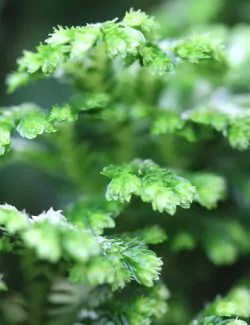
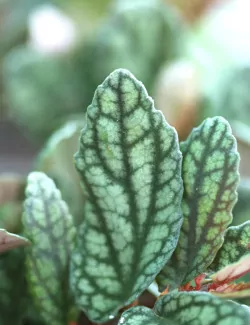
Hymenophyllum sp.Check out our full fern growing guide for more tips (light, watering, substrate, common mistakes to avoid).€8.00 Price
-
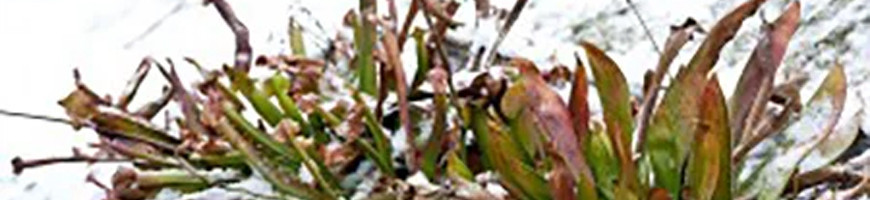
Overwintering carnivorous plants: dormancy and best practices
Overwintering carnivorous plants means adapting protection from the cold, light, and watering to suit each species. Here are the answers to the main questions to help you get through this delicate period and prepare a strong comeback in spring.
Winter dormancy
1 - What is winter dormancy in carnivorous plants?
Dormancy is a natural vegetative rest that allows many carnivorous plants to conserve their reserves and survive unfavourable conditions. During this period, growth slows down significantly, insect trapping decreases, and it's normal to see a reduction or partial loss of leaves depending on the species.
Cold tolerance by species
2 - Do Sarracenia and Darlingtonia tolerate frost?
Yes, these species generally have nothing to fear from frost. Their tolerance threshold is high, but Sarracenia remain more or less hardy depending on the species: S. purpurea, the most northerly, can stay literally frozen for several weeks, while S. leucophylla, from further south, can be weakened by strong, prolonged frost, especially in a small pot. Darlingtonia aren't afraid of frost either.
3 - How do you protect Dionaea in winter?
Venus flytraps grow at roughly the same latitudes as Sarracenia and need similar protection. A large pot sheltered from rainfall, wrapped in bubble wrap during prolonged frost, is usually enough to protect them effectively.
4 - Should Drosera be brought indoors in winter?
No, it's better to gradually acclimatise Drosera to outdoor cold than to bring them into a dry, heated indoor space, which would weaken them further. Placing the pots against a wall, sheltered from the wind, is usually enough to protect them from light frost. In colder conditions, wrap the pots in bubble wrap to stop the soil from freezing deep down. An unheated conservatory or a garage with supplementary lighting are good alternatives. European Drosera such as D. intermedia and D. rotundifolia have a hardiness comparable to Sarracenia.
5 - Does Cephalotus need winter coolness?
Cephalotus can be kept in a terrarium year-round, but a few cooler months encourage flowering and the production of larger traps.
6 - Should tropical carnivorous plants be brought indoors?
Yes. Plants of tropical origin (Nepenthes, Heliamphora, Genlisea, Catopsis) should stay indoors during winter. Mexican Pinguicula, such as P. 'Sethos', ideally prefer a cool, dry environment, but between freezing outdoor conditions and a heated indoor space, indoors remains preferable.
Signs and best practices
7 - What signs indicate winter stress?
Some signs are normal during winter and not a cause for concern: smaller traps, duller or washed-out colours, slower growth, a temporary halt in new leaf production. These reactions are usually temporary and part of the plant's natural adaptation to the cold.
8 - What are the best practices for overwintering carnivorous plants?
Ensure good light even when days are short, maintain a stable temperature suited to each species, reduce watering during dormancy, and protect the most sensitive species (cold frame, conservatory, bubble wrap).
Successfully overwintering your carnivorous plants
By respecting each species' natural cycle — dormancy, cold tolerance and specific needs — you reduce the risk of winter stress and help your carnivorous plants come back strong in spring.