New products

New products
All new products
Carnivorous Plants – Buying, Growing, and Rare Species | Carnivores

Carnivorous plants

Carnivorous plants – Discover the most fascinating species in the plant kingdom

Welcome to our comprehensive collection of carnivorous plants , carefully cultivated in our professional greenhouses. Whether you are a beginner or an experienced collector, you will find here the most reliable, spectacular, and best-suited species for indoor, outdoor, or terrarium cultivation.

A variety of species, selected by enthusiasts.

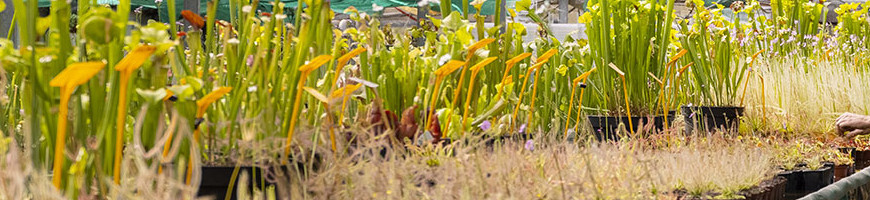
We offer a wide selection of iconic species: Dionaea muscipula (the famous "Venus flytrap"), Sarracenia (carnivorous plants with tubular traps), Drosera with their sticky tentacles, and the delicate Pinguicula . All our plants are produced or acclimatized under optimal conditions, guaranteeing robustness and quality.

Plants suitable for all levels

Whether you're looking for an easy plant to start with or a rare species to enrich your collection, our selection covers all needs. Hardy species like Sarracenia are perfect for the outdoors, while Drosera and Pinguicula thrive indoors or in terrariums. Each product description includes specific advice to guide you.

Controlled growing conditions

At Karnivores, we pride ourselves on offering plants grown in suitable substrates: live sphagnum moss , blonde peat , professional mixes , soft water, controlled humidity.

Why choose our carnivorous plants?
  • Plants selected and cultivated by experts
  • Robust and vigorous varieties , suitable for beginners and enthusiasts.
  • Carefully delivered from our greenhouses
  • Professional advice based on our horticultural experience
  • A unique selection of classic and rare species

A fascinating world to discover

Carnivorous plants are much more than mere curiosities: they are highly evolved species , adapted to nutrient-poor environments, capable of attracting, capturing, and digesting their prey. Cultivating them, accessible to everyone, brings a true botanical and aesthetic dimension to your home, balcony, or garden.

Explore our range and find the perfect carnivorous plant for your world!

A short introduction to the fascinating world of carnivorous plants:

Helpful tips for growing a carnivorous plant at home

Carnivorous plant?! A brief history of carnivory

Subcategories

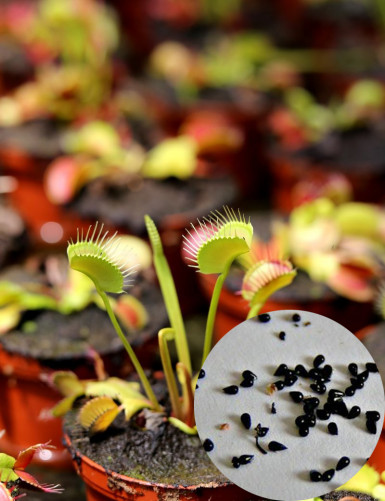
  • Dionaea

    Dionaea muscipula , the famous "flytrap" plant, is the iconic carnivorous plant. Native to temperate bogs, it closes its traps when an insect touches its sensitive cilia. At Karnivores.com , we select vigorous plants with vibrant colors and varied trap shapes, suitable for both beginners and collectors.

    To successfully cultivate them, provide plenty of light, a poor, acidic substrate, and always water with demineralized water. Outdoors, the Venus flytrap appreciates a cool winter dormancy; indoors, opt for very bright light (south-facing window, greenhouse, or grow lights). Below you will find our selection tips and useful links to our featured varieties and practical guides on the blog.

    How to choose your Dionaea?

    • Light: very sunny location.
    • Water: only rainwater, reverse osmosis or demineralized water.
    • Substrate: Special mix for carnivorous plants.
    • Winter: a period of rest in cool conditions is particularly recommended for robust plants.
    • Varieties: red ('Akai Ryu'), large traps ('Big Mouth'), toothed shapes ('Fused Tooth').

    To discover

    Key varieties: Dionaea 'Akai Ryu' · Dionaea 'Big Mouth' · Dionaea 'Fused Tooth'

    Practical guides: Why isn't my Venus flytrap closing its traps? What type of water should I use for carnivorous plants? How do I overwinter carnivorous plants?

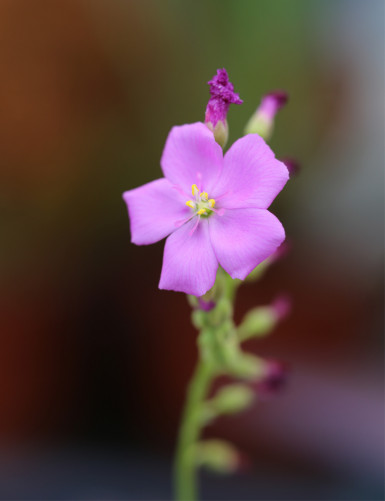
  • Drosera

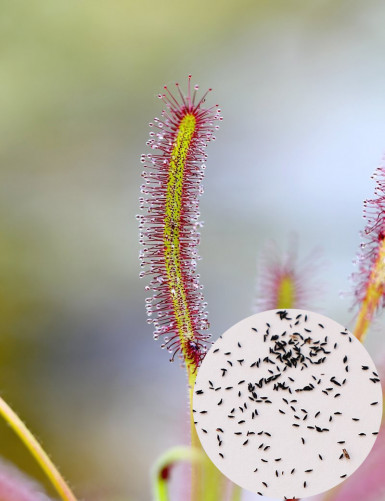
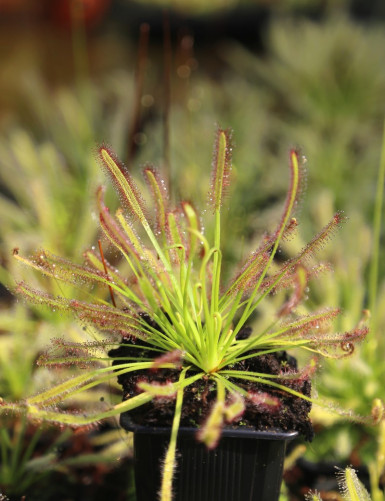
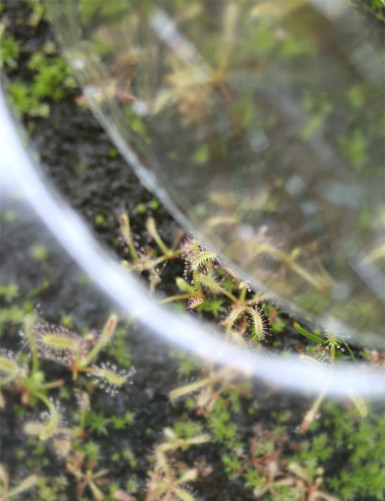
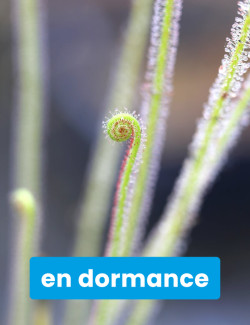
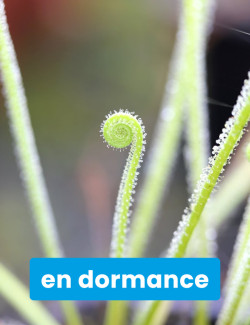
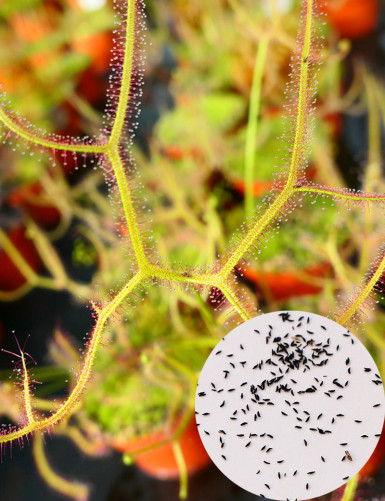
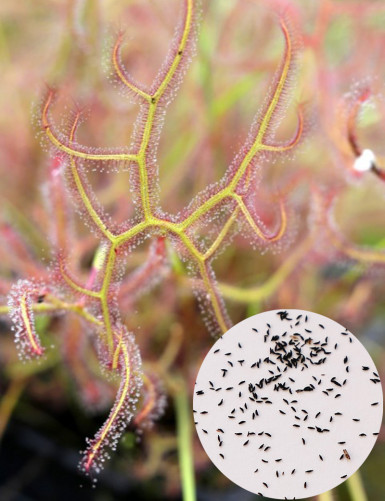
    Sundews (Drosera ): sticky plants with glossy tentacles, perfect for beginners and for natural fungus gnat control. Discover our carefully cultivated selection on Karnivores.com. We favor vigorous plants with true-to-life forms, adapted to French growing conditions. For success, provide adequate light, low-mineral water, and an acidic, unfertilized substrate. Each product description specifies size, variety, and care instructions to help you choose the plant that's right for you.

    Tips & criteria

    • Light: very bright location (outdoors for hardy species).
    • Water: only rainwater, reverse osmosis or demineralized water (never tap water).
    • Substrate: unfertilized blonde peat + perlite/sphagnum moss depending on the species.
    • Winter: rest in cool places for temperate species (e.g. Dionaea, Sarracenia).
    • Repotting: in spring, without fertilizer, in a pot with drainage holes and a saucer.

    To discover

    Products: Drosera · Hybrid Drosera · Drosera Substrate

    Guides: All about Drosera · What water to use? · Overwintering carnivorous plants

  • Pinguicula

    Pinguicula : sticky leaves, excellent against midges, requires bright light and well-draining soil. Discover our carefully cultivated selection on Karnivores.com. We favor vigorous plants with true-to-life forms, adapted to French conditions. For success, provide adequate light, low-mineral water, and an acidic, unfertilized substrate. Each product description specifies size, variety, and care instructions to help you choose the perfect plant for you.

    Tips & criteria

    • Light: very bright location (outdoors for hardy species).
    • Water: only rainwater, reverse osmosis or demineralized water (never tap water).
    • Substrate: unfertilized blonde peat + perlite/sphagnum moss depending on the species.
    • Winter: rest in cool places for temperate species (e.g. Dionaea, Sarracenia).
    • Repotting: in spring, without fertilizer, in a pot with drainage holes and a saucer.

    To discover

    Products: Pinguicula sp seeds · Substrate for Pinguicula

    Guides: Pinguicula cuttings Pinguicula capture strategy · Growing tips for Pinguicula

  • Sarracenia

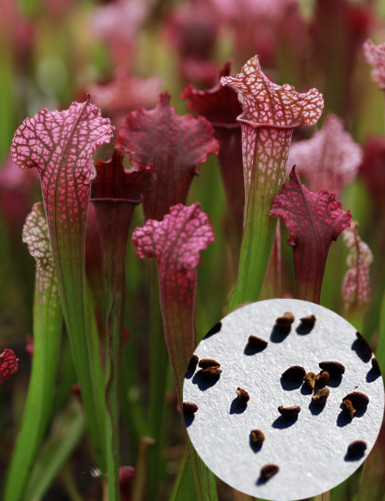
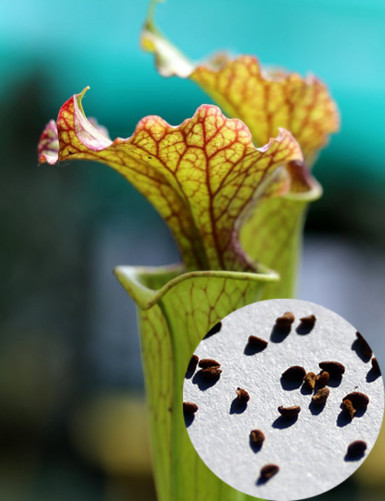
    Sarracenia : spectacular outdoor pitchers, very hardy, ideal for containers or mini-marshes. Discover our carefully cultivated selection on Karnivores.com. We favor vigorous plants with true-to-life forms, adapted to French conditions. For success, provide adequate light, low-mineral water, and an acidic, unfertilized substrate. Each product description specifies size, variety, and care instructions to help you choose the perfect plant for you.

    Tips & criteria

    • Light: very bright location (outdoors for hardy species).
    • Water: only rainwater, reverse osmosis or demineralized water (never tap water).
    • Substrate: unfertilized blonde peat + perlite/sphagnum moss depending on the species.
    • Winter: rest in cool places for temperate species (e.g. Dionaea, Sarracenia).
    • Repotting: in spring, without fertilizer, in a pot with drainage holes and a saucer.

    To discover

    Products: Our hybrid Sarracenia · Sarracenia substrate · Our Sarracenia purpurea

    Guides: All about Sarracenia · Preserving Sarracenia traps · Sarracenia growing guide

  • Darlingtonia

    Darlingtonia : California cobra, prefers cool water and oxygenation, advanced cultivation. Discover our carefully cultivated selection at Karnivores.com. We prioritize vigorous plants with true-to-life forms. For success, provide appropriate light, low-mineral water, and an acidic, unfertilized substrate.

    Tips & criteria

    • Lighting: very bright location.
    • Water: only rainwater, reverse osmosis or demineralized water (never tap water).
    • Substrate: unfertilized blonde peat + perlite/sphagnum moss.
    • Winter: rest in the cool.
    • Repotting: in spring, without fertilizer, in a pot with drainage holes and a saucer.

    To discover

    Products: Darlingtonia californica seeds · Darlingtonia plants · Special carnivorous plant mix

    Guides: All about Darlingtonia californica · Darlingtonia californica in its natural habitat · Repotting carnivorous plants

  • Cephalotus

    Carnivorous plant Cephalotus follicularis Carnivorous plant of the genus Cephalotus for sale on karnivores.com

    Passive carnivorous plants, the rare Cephalotus follicularis which only grows in a very restricted area of Australia, is also particularly aesthetic.

    Please note, our stock of this extraordinary plant is limited!

  • Seeds & seedling kits

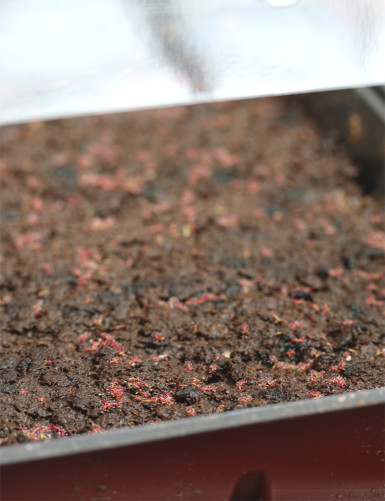
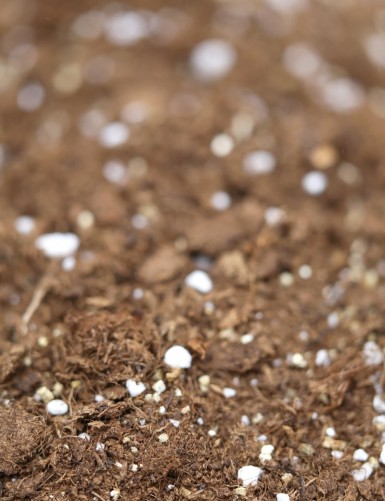
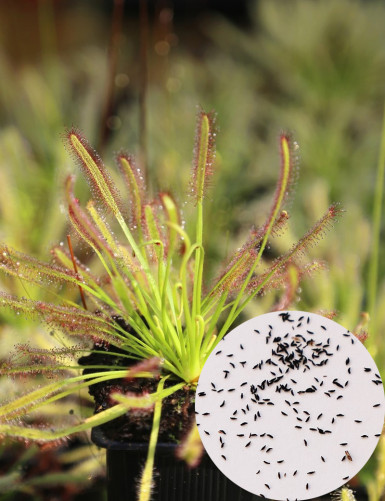
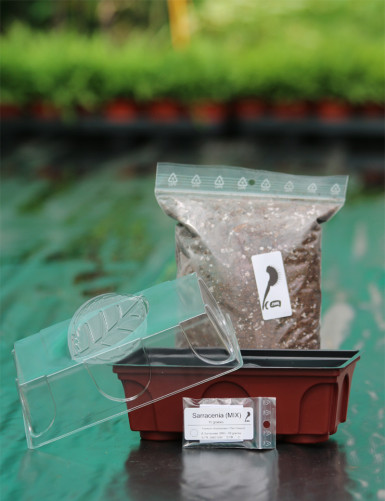
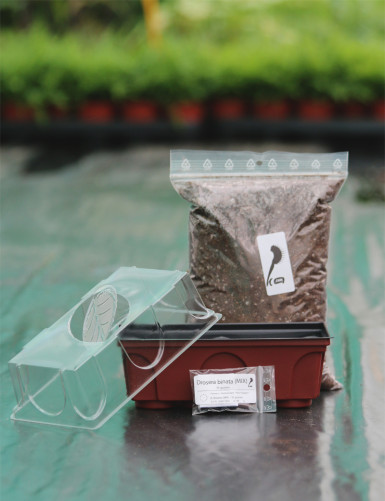
    Seeds & Seedling Kits : For patient sowing, germination in cool conditions is possible depending on the species. Ready-to-use kits are available. Discover our carefully cultivated selection on Karnivores.com. We prioritize vigorous plants with true-to-life forms, adapted to French growing conditions. For success, provide adequate light, low-mineral water, and an acidic, unfertilized substrate. Each product description specifies size, variety, and care instructions to help you choose the perfect plant for you.

    Tips & criteria

    • Light: very bright location (outdoors for hardy species).
    • Water: only rainwater, reverse osmosis or demineralized water (never tap water).
    • Substrate: unfertilized blonde peat + perlite/sphagnum moss depending on the species.
    • Winter: rest in cool places for temperate species (e.g. Dionaea, Sarracenia).
    • Repotting: in spring, without fertilizer, in a pot with drainage holes and a saucer.

    To discover

    Products: https://www.karnivores.com/fr/recherche?controller=search&s=Graines+&+kits+semis · https://www.karnivores.com/fr/recherche?controller=search&s=Graines+&+kits+semis+hybride · https://www.karnivores.com/fr/recherche?controller=search&s=Graines+&+kits+semis+substrat

    Guides: Sowing Carnivorous Plants · Complete Guide to Carnivorous Plant Care · Sowing Cephalotus follicularis

  • Heliamphora

    Heliamphora are pitcher-shaped carnivorous plants of the same family as Sarracenia . The genus is however rarer because of a much more restricted distribution, since they are found only on the high plateaus of Guyana and Venezuela (tepuys), as well as in the far north of Brazil, most often far from human activity.

  • Stylidium
  • Mini-clods

    Mini-plugs : young plants for transplanting, an economical way to start a collection. Discover our carefully cultivated selection on Karnivores.com. We favor vigorous plants with true-to-life forms, adapted to French growing conditions. For success, provide adequate light, low-mineral water, and an acidic, unfertilized substrate. Each product description specifies size, variety, and care instructions to help you choose the perfect plant for you.

    Tips & criteria

    • Light: very bright location (outdoors for hardy species).
    • Water: only rainwater, reverse osmosis or demineralized water (never tap water).
    • Substrate: unfertilized blonde peat + perlite/sphagnum moss depending on the species.
    • Winter: rest in cool places for temperate species (e.g. Dionaea, Sarracenia).
    • Repotting: in spring, without fertilizer, in a pot with drainage holes and a saucer.

    To discover

    Products: Our Drosera in mini-plugs · Our Dionaea in mini-plugs · Repotting mix for your carnivorous plants

    Guides: What are mini-plugs? · Repotting carnivorous plants · All our advice on carnivorous plants

Active filters